
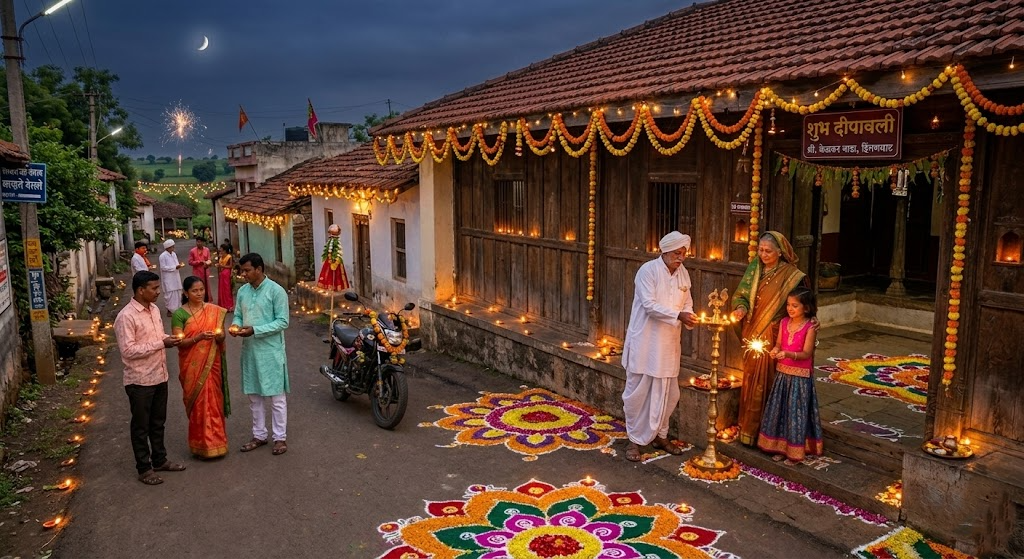
Diwali, the “Festival of Lights,” is a vibrant 5-day Hindu festival symbolizing the victory of light over darkness and good over evil, celebrated in Hinganghat with immense joy, cleaning homes, lighting diyas, creating rangoli, and exchanging sweets. Key highlights include Dhanteras, Lakshmi Pujan, and new beginnings, which boost local trade and community bonding.
Key Highlights and Cultural Significance
- Duration: A five-day festival starting from Dhanteras and ending with Bhai Dooj, typically falling in October or November.
- Lighting and Decoration: Homes, temples, and shops in Hinganghat are illuminated with diyas (oil lamps), candles, and fairy lights, symbolizing the eradication of inner darkness.
- Rangoli and Rituals: Colorful rangoli designs adorn entrances to welcome prosperity. Goddess Lakshmi and Lord Ganesha are worshiped on the main day for wealth and prosperity.
- Celebration: People wear new clothes, visit friends and family, and share sweets and snacks.
- Origin: Commemorates the return of Lord Rama to Ayodhya after 14 years of exile and his victory over Ravana.
Impact on Hinganghat
- Economic Boom: As in rest of India, local markets experience significant sales growth in clothes, jewelry, utensils, and sweets, strengthening the local economy.
- Social Harmony: The festival strengthens community bonds as people from different backgrounds participate in the festivities.
- Environmental Impact: While traditionally celebrated with clay lamps, increased use of firecrackers can lead to temporary air and noise pollution, prompting a shift toward eco-friendly celebrations.
Future Scope and Trends
- Eco-friendly Diwali: Growing awareness encourages the use of diyas and organic, smoke-free products over crackers.
- Digital Integration: Online shopping and digital greeting exchanges are changing traditional purchasing habits in local towns.
- Tourism: Focus on promoting local, authentic traditional experiences could attract more visitors to the regional festive atmosphere.