
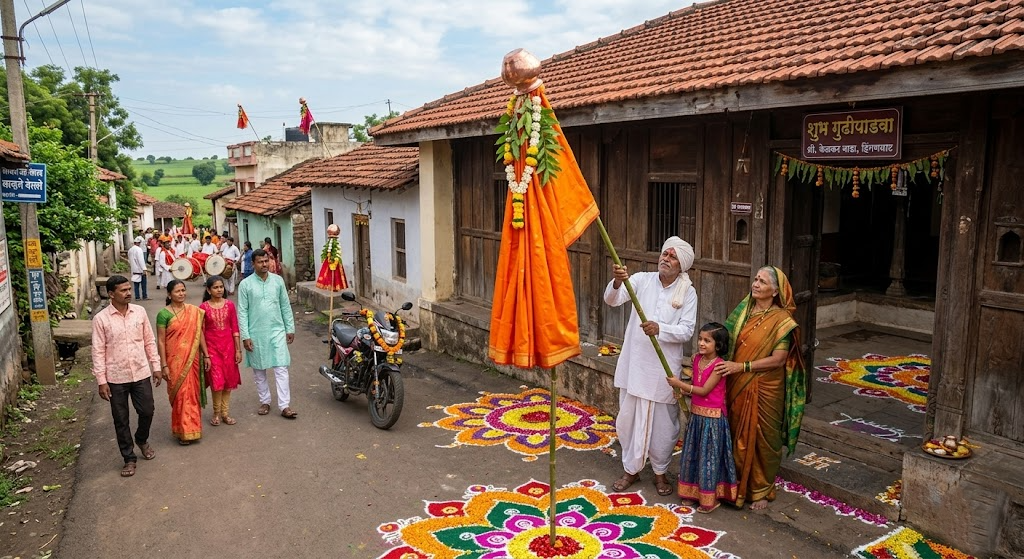
Gudi Padwa marks the Marathi New Year, celebrating spring, harvest, and victory (often associated with Shivaji Maharaj) by hoisting a decorated Gudi (bamboo staff). Key highlights include early morning rituals, traditional meals like Puran Poli, and neighborhood processions. It boosts local trade (gold/vehicles) and reinforces community bonds.
Key Highlights of Gudi Padwa:
- Symbolic Gudi: A bamboo staff decorated with bright cloth, neem leaves, mango leaves, and an inverted copper/silver pot, symbolizing victory and prosperity.
- Ritualistic Food: Consumption of bitter neem leaves and sweet jaggery (or sugar crystals) to represent the balance of life.
- Cultural Tradition: Extensive use of rangoli and flowers to decorate homes, along with community gatherings and parades.
- Auspicous Time: Considered a very favorable day for starting new business ventures, purchasing assets like gold/silver, and buying new vehicles.
Impact and Significance in Hinganghat:
- Cultural Cohesion: In regions like Hinganghat, the festival unites communities, strengthening traditional practices and cultural heritage.
- Economic Activity: The festival brings a surge in local retail, jewelry, and automobile sales, benefiting small businesses and traders in the town.
- Agricultural Importance: As it marks the start of the harvest season for Rabi crops, it acts as a day of thanksgiving for farmers in the local area.
Future Scope:
- Cultural Tourism: Promotion of local Gudi Padwa celebrations can boost regional tourism, highlighting Maharashtra’s traditions.
- Digital Adoption: Increasing, digital trends show more people exchanging greetings and ordering special traditional items online, indicating a shift towards digital commerce in rural and semi-urban areas.
- Sustainable Celebrations: Future trends suggest a focus on eco-friendly, sustainable decorations (avoiding plastic) and sustainable food practices.