
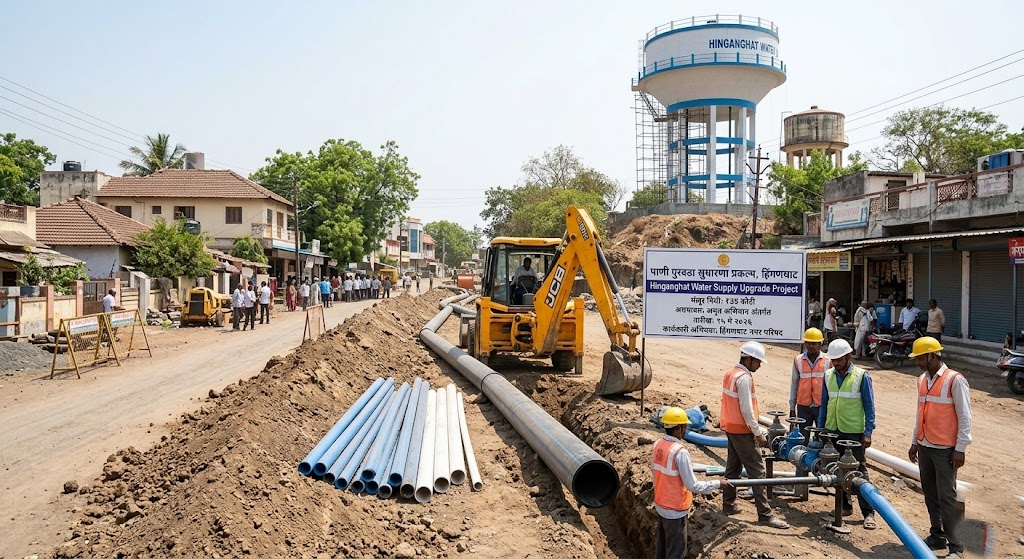
Water supply upgrades in Hinganghat focus on strengthening aging infrastructure, enhancing water treatment, and expanding distribution networks to ensure consistent, safe water access, often involving initiatives from local bodies and state-level investments to improve, reduce non-revenue water (NRW), and meet rising industrial and domestic demand.
Key Highlights
- Infrastructure Modernization: Improvements in transmission pipelines and water treatment plants to enhance efficiency.
- Water Security Measures: Implementation of water harvesting and rejuvenation works, including check dams, well deepening, and desilting.
- Jal Jeevan Mission Integration: Focus on functional household tap connections to improve supply reliability.
- Monitoring Systems: Increased focus on app-based monitoring to track supply, quality, and reduce leaks.
- Groundwater Analysis: Regular testing indicates groundwater in the Hinganghat region is generally safe for human consumption and irrigation.
Impact
- Improved Access: Reduced dependence on erratic sources, providing more reliable, clean water to residential areas.
- Health Benefits: Decreased incidence of waterborne diseases due to better-treated water and faster distribution.
- Agricultural Support: Enhanced water availability for farming through micro-irrigation and recharge structures in the Wardha district.
- Industrial Growth: Supported industrial water requirements, vital for local industrial areas.
Future Scope
- Smart Water Management: Future upgrades likely include advanced automation, automatic meter reading, and app-based control for better water usage monitoring.
- Reduced Non-Revenue Water (NRW): A shift toward reducing leakage and theft through modernized infrastructure.
- Integrated Watershed Management: Long-term sustainability through continued rainwater harvesting and construction of recharge structures.