
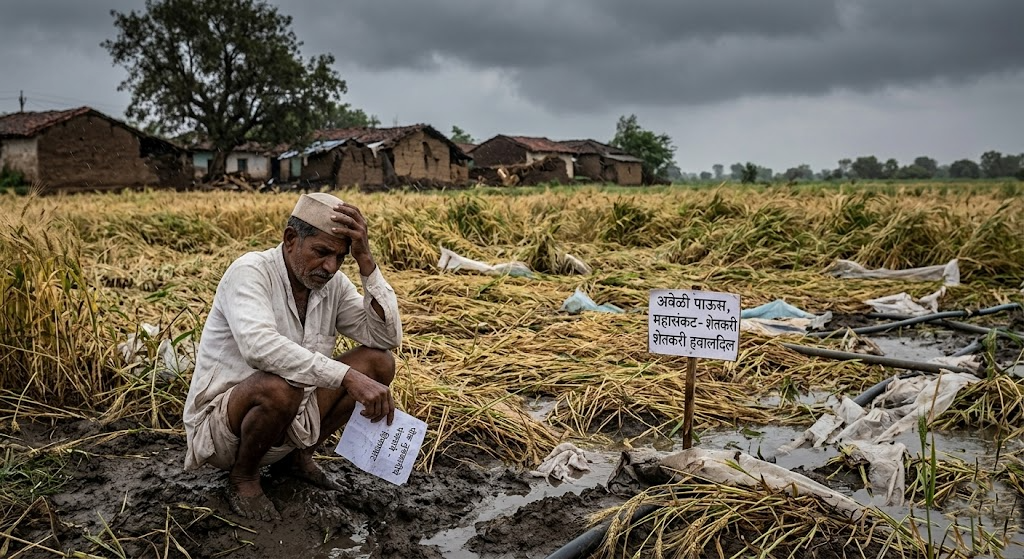
Unseasonal rains in 2026, including heavy downpours and hailstorms in Vidarbha, have severely impacted farmers in Hinganghat, ruining standing cotton and soybean crops. This crisis has escalated debt, with the government focusing on crop damage assessment and relief mechanisms for affected agriculturalists, highlighting the need for climate-resilient farming.
Key Highlights: Farmer Crisis & Unseasonal Rains (Hinganghat/Vidarbha)
- Weather Events: Unseasonal heavy showers and hailstorms (March 2026) struck the region, disrupting the normal harvest cycle.
- Crop Destruction: Significant damage to standing rabi crops, particularly maize, cotton, and oilseeds, causing large-scale output losses.
- Economic Impact: Increased debt burden for farmers, with reliance on high-cost loans (sahukar) to manage input costs.
- Government Response: High-level review meetings (March 20, 2026) aimed at accelerating crop damage assessment and insurance claim settlements.
Impact
- Severe Income Loss: Small and marginal farmers face existential crises due to ruined harvests, leading to a loss of livelihood.
- Agricultural Disruption: Increased incidence of post-harvest losses and disease/pest outbreaks in crops due to moisture, diminishing the quality of the produce.
- Debt Cycle: Many farmers are struggling with agricultural loan debt, with some forced to reduce land holdings.
Future Scope & Solutions
- Climate-Resilient Agriculture: Adoption of climate-resilient crops and techniques to combat changing, unpredictable weather patterns.
- Infrastructure Improvement: Developing localized, robust,, and rapid damage assessment mechanisms, including drones for surveillance.
- Economic Diversification: Promotion of alternative livelihood opportunities and high-value agriculture (like bamboo cultivation, which is increasing in Maharashtra).
- Financial Support: Strengthening crop insurance mechanisms and providing immediate financial aid to prevent farmer suicides and ensure sustainability.