
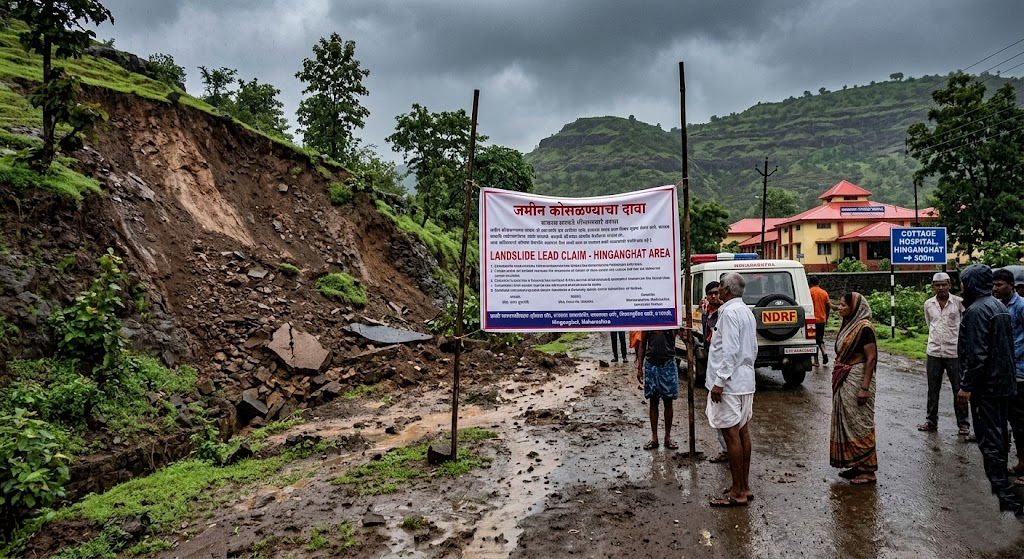
Landslides are the downslope movement of soil, rock, and debris, primarily triggered by gravity acting on weakened slopes. In Hinganghat, a city in Maharashtra, these events are primarily caused by excessive rainfall and soil erosion. Key highlights include the loss of agricultural productivity due to topsoil degradation, with significant long-term impacts like the disruption of livelihoods, damage to infrastructure, and altered landscapes. Future scope focuses on implementing landslide susceptibility mapping and enhancing slope stabilization techniques to minimize damage.
Key Highlights of Landslide Impacts in Hinganghat
- Environmental Degradation: Significant soil erosion leads to a loss of fertile land and nutrients, damaging agricultural productivity.
- Infrastructure Damage: Landslides cause severe disruptions to transportation networks and local infrastructure, requiring expensive repairs or reconstruction.
- Livelihood Disruption: Damage to agricultural land directly impacts farmers, causing economic loss and potential migration.
Future Scope and Management
- Landslide Susceptibility Mapping: Developing detailed mapping of hazard-prone areas in the region using geospatial technology to forecast risks.
- Stabilization Measures: Implementing engineering solutions like retaining walls, drainage systems, and reforestation to stabilize slopes.
- Awareness and Mitigation: Creating local awareness regarding early warning systems and safe construction practices on slopes.